Nomadic Academic Experiment: Part 1
Published:

A list of all the posts and pages found on the site. For you robots out there is an XML version available for digesting as well.
Published:
Page not found. Your pixels are in another canvas.
About me
This is a page not in th emain menu
Research
Specific Aims
Published:

Published:
Published:
I have a new preprint out on SocArXiv: Model Diversity Over Model Size: Unanimous LLM Ensembles Correct Over-Classification in Survey Coding. It’s a deep dive into one finding flagged in the CatLLM methods paper — that unanimous multi-model ensembling corrects over-classification — asking which ensemble ingredients actually drive the gain and where the gain shows up.
Published:
I have a new preprint out on SocArXiv: High Agreement, Different Stories: How LLM Classifiers Reshape Demographic Patterns in Survey Data. This is a substantially revised version of my earlier preprint, with new analyses centered on how high agreement rates can mask thematic and demographic divergence between LLM and human coders.
Published:
I have a busy conference season ahead. Here is where I’ll be presenting and what I’ll be talking about.
Published:
Published:

Published:
I have a new preprint out on SocArXiv: An Empirical Investigation into the Utility of Large Language Models in Open-Ended Survey Data Categorization.
Published:
On October 29th, 2025, I had the privilege of presenting at the University of Washington on how large language models can augment social science research. The presentation focused on CatLLM, an open-source Python package I developed to address a common challenge in demographic and social science research: analyzing open-ended survey responses and complex data at scale.
Published:
On July 1st, 2025, I had the opportunity to present joint research with Dr. William H. Dow, Professor of Health Policy and Management and Director of the Center on the Economics and Demography of Aging at UC Berkeley. Our presentation explored a fascinating contradiction in Hispanic aging: the Hispanic health paradox in cognitive outcomes.
Published:

Published:
I presented shared work with Professor William Dow and Henry Dow, comparing sociodemographic characteristics of older Hispanic adults in U.S. immigrant populations with those in their countries of origin, using census microdata and the American Community Survey (publication pending).
Published:
I had the opportunity to present our research on public school background and probability of enrollment in a graduate degree at the 2025 PSA conference.
Published:
I recently presented my research at the Science Envoy “Ask a Science Envoy” event at HopMonk Tavern in Novato—my first time presenting at a brewery and to a non-academic audience. The experience taught me the importance of navigating sensitive topics like partisanship and belief in science, especially when audience members began debating the subject.
Published:
I’m super grateful to the Dominican team of The Caribbean American Dementia and Aging Study (CADAS).
Published:
In our upcoming paper, “Measuring and Modeling the Impact of Partisan Differences in Health Behaviors on COVID-19 Dynamics,” we use a three-group Susceptible-Infected-Recovered model to highlight the importance of incorporating partisan differences into models of disease transmission. In this blog post, I want to fully explain what is happening in the background for readers who may be interested in utilizing it themselves. For those users, we also built an R shiny app (soon to be published as well). The link to the shiny app will be: here.
Published:
I’m super grateful to the Puerto Rican team of The Caribbean American Dementia and Aging Study (CADAS). We got a lot done and things are moving quickly! Looking forward to visiting again soon.
Published:
I had the opportunity to present our research on public school background and probability of enrollment in a graduate degree at the 2024 CAIR conference.
Published:
The impact of non-pharmaceutical interventions and protective health behaviors, such as the use of face masks and physical distancing, on COVID-19 dynamics is well-documented, but sub-group heterogeneities in the adoption of these behaviors remains understudied. In this paper, we describe partisan differences in the adoption of protective health behaviors, and model how these differences can impact the dynamics of COVID-19.
Published:
I have been selected as a Science Envoy for Wonderfest: The Bay Area Beacon of Science.
Published:
I have been selected as a Libby Fee Science Fellow by the Greater Good Science Center.
Published:
In the world of data analysis, ensuring the accuracy and consistency of datasets is crucial, especially when dealing with entities like school names that may be spelled differently across various sources. This discrepancy can pose significant challenges when trying to match records from different datasets. Traditional methods of data cleaning may fall short in addressing these inconsistencies effectively.
Published:
This first ever blog post is in honor of my recently passed little man, Charlie the cat, who for 12 years went together with me through thick and thin. He was the best cat anyone could’ve asked for, and no other will ever be able to replace him. I will miss you dearly, Charles, aka “Chester.” I love you always.
Short description of portfolio item number 1
Short description of portfolio item number 2
Published in The International Journal of Aging and Human Development, 2022
This study examines how having an emotionally close and active father in an adult child’s social network shapes network composition, using data from the 2015 UC Berkeley Social Networks Study (UCNets).
Recommended citation: Soria C, Lawton L. Connecting Fathers: Fathers Impact on Adult Childrens Social Networks. The International Journal of Aging and Human Development. 2023;96(1):19-32. doi:10.1177/00914150221106645 https://journals.sagepub.com/doi/full/10.1177/00914150221106645
Published in Frontiers in Public Health, 2022
This commentary examines the disparities in COVID-19 mortality rates between the U.S. and India, exploring demographic dynamics and contextual factors contributing to the “Indian death paradox.”
Recommended citation: Zanwar PP, Wallace KL, Soria C, Perianayagam A. Commentary: Examining contextual factors contributing to differentials in COVID-19 mortality in U.S. vs. India. Front Public Health. 2022;10:995751. doi:10.3389/fpubh.2022.995751 https://www.frontiersin.org/journals/public-health/articles/10.3389/fpubh.2022.995751/full
Published in SocArXiv, 2025
This study examines how US county-level social network structure relates to mortality disparities using measures from 21 billion Facebook friendships.
Recommended citation: Soria C, Feehan DM. Social Network Structure Rivals Smoking and Income as a Predictor of U.S. County Mortality. SocArXiv. 2025. https://osf.io/preprints/socarxiv/kvmx6_v3 https://osf.io/preprints/socarxiv/kvmx6_v3
Published in American Journal of Epidemiology, 2025
Cross-national comparisons of dementia prevalence are essential for identifying unique determinants and cultural-specific risk factors, but methodological differences in dementia classification across countries hinder global comparisons. This study maps the 10/66 algorithm for dementia classification, widely used and validated in low- and middle-income countries (LMICs), to the U.S. Aging, Demographics, and Memory Study (ADAMS), the dementia sub-study of the Health and Retirement Study, and assesses its performance in ADAMS.
Recommended citation: Jorge J Llibre Guerra, Jordan Weiss, Jing Li, Chris Soria, Ana Rodriguez-Salgado, Juan de Jesús Llibre Rodriguez, Ivonne Z Jiménez Velázquez, Daisy Acosta, Mao-Mei Liu, William H Dow, Assessing the 10/66 Dementia Classification Algorithm for International Comparative Analyses with the U.S., American Journal of Epidemiology, 2024;, kwae470, https://doi.org/10.1093/aje/kwae470 https://pubmed.ncbi.nlm.nih.gov/39745806/
Published in BMC Geriatrics, 2025
CADAS is a multi-purpose household study of aging focused on the life course determinants and consequences of health and dementia in Puerto Rico, Dominican Republic, and Cuba.
Recommended citation: Liu MM, Llibre-Guerra J, Soria C, Li J, Zayas Llerena T, Rodriguez G, Acosta D, Jiménez Velázquez I, Llibre-Rodriguez JJ, Dow WH. The Caribbean American Dementia and Aging Study: protocol for a population-based study of older adult health and dementia in Cuba, the Dominican Republic, and Puerto Rico. BMC Geriatr. 2025;25(1). doi:10.1186/s12877-025-06131-0 https://bmcgeriatr.biomedcentral.com/articles/10.1186/s12877-025-06131-0
Published in medRxiv, 2026
This study examines how partisan differences in contact rates, mask usage, and vaccination patterns shape respiratory disease transmission dynamics.
Recommended citation: Soria C, Dorelien A, Feehan D, Mahmud A. Partisan differences in health behaviors can impact respiratory disease dynamics. medRxiv. 2026. doi:10.64898/2026.01.14.26344076 https://www.medrxiv.org/content/10.64898/2026.01.14.26344076v1
Published in SocArXiv, 2026
CatLLM is an open-source Python and R package offering a three-stage pipeline for coding open-ended survey responses with large language models, with defaults calibrated by a systematic empirical study evaluating 21 LLMs across three capability tiers, six providers, and four survey questions.
Recommended citation: Soria C. Scaling Open-Ended Survey Coding: An LLM Pipeline Where Definitions Do the Heavy Lifting. SocArXiv. 2026. https://osf.io/preprints/socarxiv/gjvcf_v1 https://osf.io/preprints/socarxiv/gjvcf_v1
Published in Journal of Open Source Software, 2026
Peer-reviewed software paper introducing CatLLM, an open-source Python and R toolkit for reproducible LLM-powered text classification, with defaults calibrated against expert human coders across multiple survey datasets.
Recommended citation: Soria C. CatLLM: A Python package for Generating, Assigning, and Scoring Open-Ended Survey Data and Images. Journal of Open Source Software. 2026. doi:10.21105/joss.09678 https://doi.org/10.21105/joss.09678
Published in SocArXiv, 2026
A multilabel evaluation of eight LLMs against human coders on 3,200 open-ended responses from the UC Berkeley Social Networks Study, showing how high per-category agreement can mask thematic over-classification and demographic divergence.
Recommended citation: Soria C. High Agreement, Different Stories: How LLM Classifiers Reshape Demographic Patterns in Survey Data. SocArXiv. 2026. https://osf.io/preprints/socarxiv/85kyd_v1 https://osf.io/preprints/socarxiv/85kyd_v1
Published in SocArXiv, 2026
Across 16 LLMs and four open-ended survey questions, unanimous voting across diverse models corrects over-classification on subjectively ambiguous categories, with cross-provider diversity—not temperature or within-family size—as the active ingredient. As few as three diverse lower-tier models can reliably exceed GPT-5.
Recommended citation: Soria C. Model Diversity Over Model Size: Unanimous LLM Ensembles Correct Over-Classification in Survey Coding. SocArXiv. 2026. https://osf.io/preprints/socarxiv/er6mz_v1 https://osf.io/preprints/socarxiv/er6mz_v1
Published in Neuroepidemiology, 2026
A population-based study estimating the prevalence of dementia and associated modifiable risk factors among older adults in Cuba, using the CADAS protocol and the 10/66 diagnostic algorithm across 13 urban and rural catchment areas in western Cuba.
Recommended citation: Llibre-Rodriguez JJ, Zayas T, Llibre-Guerra JJ, Diaz N, Martinez Z, Santos A, Liu MM, Soria C, Acosta D, Jiménez-Velázquez IZ, Dow WH. Prevalence of Dementia and Modifiable Risk Factors among Older Adults in Cuba: A Population-Based Study. Neuroepidemiology. Published online July 7, 2026. doi:10.1159/000553277 https://doi.org/10.1159/000553277
Published in Social Psychology Quarterly, 2026
A study of how people explain why they can—or cannot—rely on family and friends for support, drawing on open-ended responses from the UC Berkeley Social Networks Study (UCNets).
Recommended citation: Fischer CS, Soria C. Why Would Others Help Me?: How People Explain Why They Can (or Cannot) Rely on Family and Friends. Social Psychology Quarterly. 2026.
Published in JAMA Neurology, 2026
Two decades of change in dementia prevalence across five 10/66 Dementia Research Group sites in Latin America and the Caribbean. Pooled crude prevalence rose from 10.6% to 16.9%; after age and sex standardization, prevalence held steady in Cuba and the Dominican Republic but rose substantially in Mexico, Peru, and Puerto Rico — contrasting with the declining trends reported in high-income countries.
Recommended citation: Llibre-Guerra JJ, Wu YT, Acosta I, Soria C, Sosa AL, Acosta D, Jiménez-Velázquez IZ, Guerra M, Salas A, Lu R, Llibre-Rodriguez JJ, Prina M. Trends in Dementia Prevalence Across Latin America and the Caribbean. JAMA Neurology. Published online July 13, 2026. doi:10.1001/jamaneurol.2026.2305 https://doi.org/10.1001/jamaneurol.2026.2305
Published in SocArXiv, 2026
Eighteen LLMs across four access tiers — proprietary flagships to laptop-scale open weights — benchmarked against human consensus on five survey-coding tasks. The flagship tier’s margin over cheaper commercial models is statistically indistinguishable from zero despite 1.3–6× higher per-token prices, and the largest open-weight models match both proprietary tiers on cell-level agreement.
Recommended citation: Soria C. What Does Frontier Access Buy? Benchmarking LLM Access Tiers and the Reproducibility Case for Open Weights in Survey Coding. SocArXiv. 2026. https://osf.io/preprints/socarxiv/5g34x_v1 https://osf.io/preprints/socarxiv/5g34x_v1
Published:
Despite rapidly expanding interest in fathers, scholars know little about the impact of fathers on adult health and well-being. How does the positive presence – or lack thereof - of fathers in adult children’s lives affect their social networks? Drawing on attachment theory and social capital theory to examine novel UC Berkeley Social Networks Study (UC Nets) data, I seek to extend understanding of how father attachment and socialization can influence adult social well-being. I find that individuals who name a father in their social network have significantly more social ties. Those with a “close” father have larger social networks than those who name a father who is not “close.” This has consequences for individuals’ broader networks: respondents with a “close” father report more males – but not females – in social activities networks. In contrast, having a “close” mother was associated with more females to confide in, but not males.
Published:
This talk examined how accurately leading large language models classify open-ended survey responses compared to human coders. Findings suggest that LLMs are best used to augment human coders in a loop rather than as a sole source of classification.
Published:
Democrats tended to have lower contacts, increased mask-usage, and a higher probability of vaccination during the COVID-19 pandemic. But, what happens when Democrats live in counties where they are the minority? How does this impact their behavior?
Published:
Joint presentation with Dr. Audrey Dorélien examining partisan differences in the adoption of protective health behaviors during COVID-19 and modeling how these differences impact disease dynamics. Using detailed survey data on partisanship, contact rates, mask usage, and vaccination rates, we demonstrated that partisan differences in health behaviors exceed racial and gender differences. We incorporated these observations into a Susceptible-Infected-Recovered (SIR) model framework that explicitly incorporates partisanship to identify the most significant mechanisms driving disease spread, emphasizing the importance of considering partisan identification in public health policy and pandemic preparedness.
Published:
Radio interview as a Wonderfest Science Envoy on KPOO’s “Let Me Touch Your Mind” show, hosted by Marilynn Fowler. Discussed research on partisan-influenced health outcomes and how political partisanship shapes public health behaviors and disease spread.
Published:
Presented as a Wonderfest “Science Envoy” at “Ask a Science Envoy: Anthropocene Alarm; Partisan Contagion,” a public science event at HopMonk Tavern co-hosted with Marin Science Seminar, alongside UC Berkeley biologist Kristy Mualim (Genetic Biodiversity Loss in the Anthropocene). The talk explored how political partisanship significantly influences how different groups respond to public health guidance, affecting their adherence to protective measures against infectious diseases. Understanding partisan-based disparities in acceptance of scientific evidence helps us to predict the population-wide spread of diseases and to improve public health outcomes.
Published:
Participated in a panel discussion on the benefits and challenges of AI in demography at the 2025 PAA Annual Meeting. Discussed use-cases and benefits/limitations of large language models (LLMs) for survey research alongside other panelists.
Published:
Presented research with William H. Dow and Henry Dow comparing sociodemographic characteristics of Caribbean Hispanic older adult immigrants in the United States with those in their origin countries. Session chaired by Marc A. Garcia.
Published:
Joint presentation with Dr. William H. Dow examining the Hispanic health paradox in cognitive aging. The talk explored the contradiction in Hispanic aging where Mexican migrants, despite being more socioeconomically disadvantaged, demonstrate better cognitive aging outcomes than other Hispanic migrant groups. This research contributes to understanding health disparities and the complex relationship between socioeconomic status and health outcomes in aging populations.
Published:
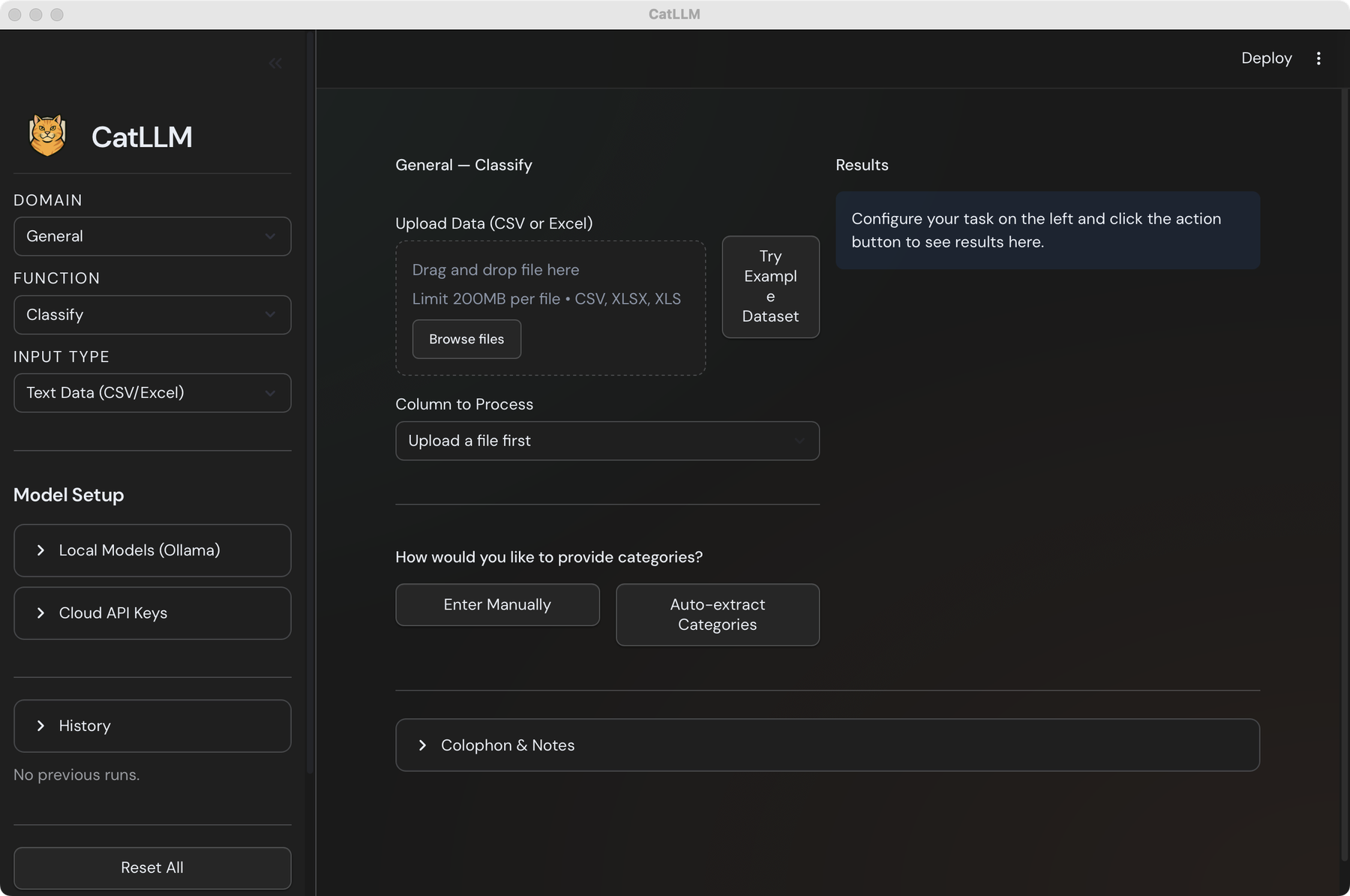
Presented on computational tools that augment social science research using large language models. Introduced CatLLM—an open-source Python package that enables researchers to apply language and vision models to survey coding, image analysis, and data categorization without machine learning expertise. The talk covered practical applications in demographic research, including automated coding of open-ended survey responses and analysis of cognitive health data.
Published:
Hands-on workshop on computational tools that augment social science research using large language models, presented as part of Session 103, “Innovative Data Methods and AI Applications,” at the 2026 Population Association of America (PAA) Applied Demography Conference. Introduced CatLLM—an open-source Python package that enables researchers to apply language and vision models to survey coding, image analysis, and data categorization without machine learning expertise. The workshop covered practical applications in demographic research, including automated coding of open-ended survey responses and analysis of cognitive health data.
Published:
Invited talk as part of the session “Understanding NIH-Funded Training Opportunities for Early-Career Population Scientists,” chaired by Sarah Burgard (University of Michigan). Spoke about the benefits and challenges of applying for NIH F31 fellowship funding as an early-career population scientist.
Published:
Personal networks influence health and mortality at the individual level, but less is known about how population-scale social network structure relates to mortality. This study examines how US county-level social network structure relates to mortality disparities. Using measures from 21 billion Facebook friendships, we investigate how two structural features of population social networks — cohesiveness and diversity — are associated with age-standardized and age-specific mortality rates. Bivariate results show that measures of social network structure rival smoking rates, median income, and educational attainment in their association with mortality rates. Social network structure remains predictive of mortality even after controlling for traditional measures like socioeconomic status and rural/urban classification. Network diversity is associated with lower mortality in both bivariate and multivariate analyses. Network clustering is associated with higher mortality bivariately, but this association reverses after controlling for county-level demographic and socioeconomic factors, revealing a protective effect masked by confounding. Age-stratified analyses further complicate this picture, showing that clustering predicts lower mortality among adults aged 15-64 but higher mortality among those 70 and older. These findings highlight social network structure as an important dimension of place-based health disparities, one not fully captured by conventional measures of socioeconomic composition or spatial segregation.
Published:
How effectively can Large Language Models (LLMs) approximate social scientist judgment in categorizing open-ended survey responses? This study compares eight contemporary LLMs—GPT-5, Claude Sonnet 4.5, Gemini 2.5 Flash, Grok 4 Fast, Qwen 3, DeepSeek v3.1, Llama 4, and Mistral Medium—to human annotators on 3,208 responses from the UC Berkeley Social Networks Study, spanning four question types and yielding 19,248 multi-label coding decisions. Models do not reach human-like inter-rater reliability in comparisons with individual coders (Krippendorff’s alpha 0.58–0.59 vs. 0.77 for humans), yet they achieve high accuracy rates of 82–97% relative to a human consensus standard, depending on task complexity. Accuracy declines for longer, more ambiguous responses and for rare thematic categories, indicating that model performance is sensitive to both response length and category prevalence. Demographic differences in performance are present—for example, responses from female respondents are classified less accurately—but much of this gap is associated with differences in response style, such as length and complexity, rather than clearly attributable to direct demographic targeting.
Published:
As large language model (LLM)–based text classification becomes routine in the social sciences, researchers confront dozens of competing models, inconsistent advice on prompting, and little standardized tooling with evidence-based defaults. CatLLM, an open-source Python and R package, addresses this gap with a three-stage pipeline — exploration, extraction, classification — for coding open-ended survey responses. The package supports multi-model ensembles, batch processing, and fully local deployment via open-weight models, allowing researchers working with sensitive data to avoid transmitting responses to external servers.
Published:
Using four waves of the Health and Retirement Study (2016-2022), we document a sharp post-COVID cognitive decline in a nationally representative panel of older adults. Mean performance on the 27-point cognitive composite was flat across three pre-pandemic waves, then fell by approximately 0.7-0.9 points in 2022 — three to four times larger than any prior wave-to-wave fluctuation. This decline replicated across the full balanced panel and two non-overlapping Leave Behind cohorts, ruling out sample attrition and rotation-group assignment as explanations. Descriptively, both loneliness and structural social isolation were associated with lower baseline cognition and steeper decline. Loneliness showed an acute spike at COVID onset followed by partial recovery; structural isolation rose monotonically through 2022 with no sign of attenuation. Preliminary fixed-effects models provide initial causal evidence that within-person increases in structural isolation predict within-person cognitive decline (b = -0.30, p < .001). The UCLA loneliness scale adds an independent negative association (b = -0.47, p < .001). These estimates survive elimination of all stable individual traits via person fixed effects, strengthening causal inference. Whether isolation’s cognitive penalty was specifically amplified by COVID — beyond individual illness and mortality — awaits a fuller model with area-level contextual controls.
Published:
Contributed to the Sage Research Methods Video collection Doing Survey Research, produced by Sage Publishing as a teaching and training resource for students and researchers. In the interview I discussed dementia classification using survey data, the use of large language models for classifying open-ended survey responses, and approaches to quality control in survey data workflows.
Published:
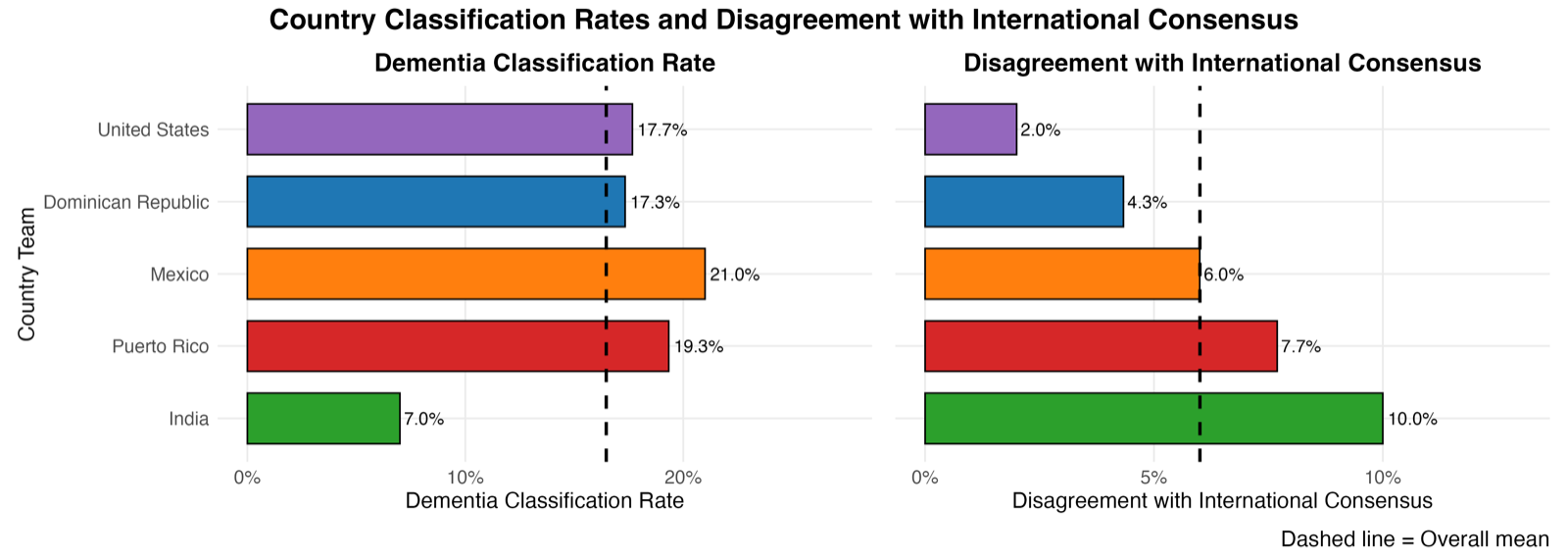
Presented as part of a Gateway/HCAP consensus session at AAIC on the Caribbean American Dementia and Aging Study (CADAS). Twenty-seven clinicians from five countries (Dominican Republic, Mexico, Puerto Rico, the United States, and India) independently classified 300 older adults using CADAS survey data, applying a structured 10-question NIA-AA diagnostic algorithm through a web-based consensus platform. Each case was reviewed by at least three clinicians per country team; cases with within-country disagreement underwent moderated consensus discussion, and international consensus was defined by majority rule across all five teams.
Published:
Recent infectious disease outbreaks highlighted the critical role of human behavior and social processes in shaping infectious disease dynamics. Individual decisions—such as whether to wear a mask, get vaccinated, or work remotely—are not made in isolation, but are strongly influenced by the current state of the disease and individuals’ perceptions of risk. Such behavioral responses are also not fixed and change over the course of a pandemic. As these behavior changes accumulate across individuals, they scale up to shape population-level outcomes, including the timing, magnitude, and geographic spread of outbreaks. In order to curtail disease spread with minimal impact to a population, governmental interventions to control epidemics must therefore account for individual decision-making and, particularly, noncompliance or even defiance of recommended or even mandated policies. Modeling techniques developed to account for such dynamic human responses are therefore essential for understanding and managing infectious disease spread.
Published:
Large language models are increasingly used to classify open-ended survey responses, but they systematically over-classify, assigning categories too liberally on ambiguous cases and producing high sensitivity but low precision. Drawing on the established principle that aggregating multiple noisy annotators outperforms any single annotator, we test whether ensembles of LLMs can correct this problem. Using four open-ended survey questions with human-coded ground truth (3,208 responses, 6 categories per question), we evaluate ensemble configurations across 16 models spanning three cost tiers and six providers. Unanimous voting (requiring all models to agree before assigning a category) directly corrects over-classification by dramatically improving specificity: on the most ambiguous categories, the false positive rate drops from 50% to 3%, and precision triples. This advantage concentrates precisely where over-classification is worst, on subjectively ambiguous categories with fuzzy boundaries, while categories with clear criteria show no benefit. This pattern replicates across three independent datasets. Decorrelated errors are what drive the correction, and of the sources we test, cross-provider model access is the most reliable: models from different providers err differently on ambiguous cases, and consensus filters the idiosyncratic false positives. Neither temperature variation nor within-family size scaling reliably decorrelates errors. As few as three diverse lower-tier models suffice to reliably exceed GPT-5. For the ambiguous classification problems common in open-ended survey research, the well-established annotation principle of multi-coder agreement transfers directly to LLMs: investing in diverse perspectives is more effective than investing in a single expensive model.
Published:
Open-ended survey items capture what closed-ended items cannot, and are routinely dropped from analysis because hand-coding them does not scale. catllm puts the whole coding loop inside Stata: extract/explore discover categories directly from the data, classify applies a category scheme and returns ordinary Stata indicator variables ready for tabulate or regress. It supports OpenAI, Anthropic, and Google models as well as local open-weight models through Ollama, so restricted-use data need never leave the analyst’s machine.
Undergraduate course, University 1, Department, 2014
This is a description of a teaching experience. You can use markdown like any other post.
Workshop, University 1, Department, 2015
This is a description of a teaching experience. You can use markdown like any other post.